How to gamify your to-do list (without it becoming a chore)
Points, streaks and rewards can genuinely move you — or curdle into another system you resent. The mechanics that work, the ones that backfire, and how to set up a reward menu you'll keep.
· 7 min read
Games get people to grind for hundreds of hours at tasks that are, objectively, work. Pointing that machinery at your actual to-do list is an old and good idea. It's also easy to get wrong — half the gamified apps ever installed end up as another source of guilt with a cuter interface. The difference is mechanical, and worth learning.
The three mechanics that transfer
- Immediate wins. Games reward the action now, not at the end of the quarter. Your list needs the same: something pleasant must happen at the moment of completion — a satisfying check, a credit, visible progress — because “a promotion eventually” motivates nobody's Tuesday afternoon.
- Visible progress. XP bars work because effort accumulates somewhere you can see. A done-list, a filling ring, a growing count — the form matters less than the visibility.
- Meaningful stakes, gentle floors. Games let you fail forward: you lose the round, never your save file. Any system that can wipe your accumulated progress on a bad day has copied the stakes and forgotten the floor.
The mechanics that backfire
- Generic rewards. Badges and gold stars you never asked for are wallpaper within a week. A reward only pulls if you actually want it.
- Punishment dressed as play. HP damage for missed dailies, disappointed mascots, red shame-numbers: for the people who most need external structure, punishment doesn't motivate — it teaches app-avoidance.
- Grinding the meta-game. If organizing the system becomes more rewarding than doing the tasks, the game has eaten the work. (You know who you are.)
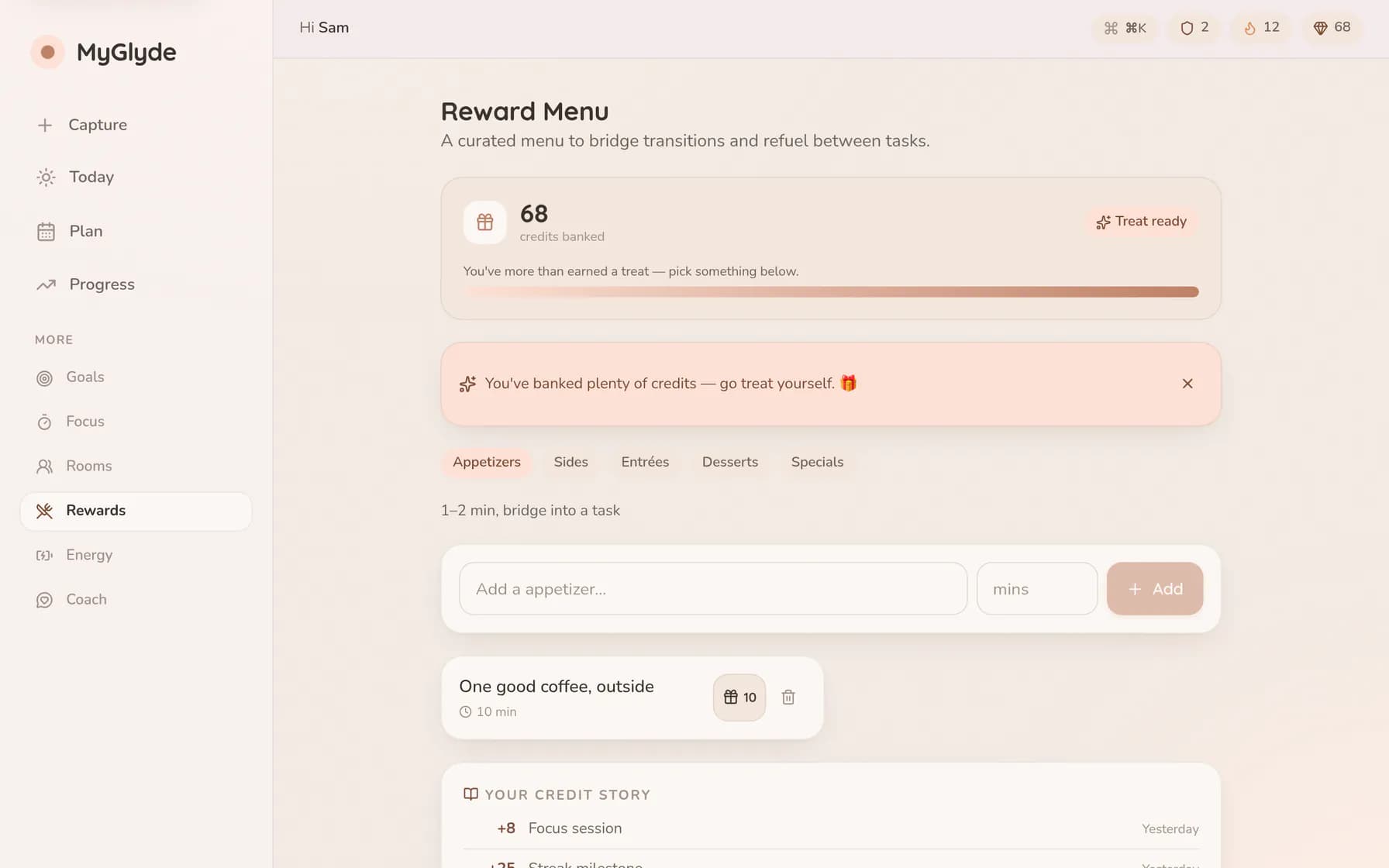
Build a reward menu you'll respect
- List five treats you genuinely, slightly-guiltily want: the fancy coffee, an episode, an hour of gaming, a lazy bath, buying the book.
- Price them in effort-credits — small enough that an ordinary productive day earns one, big enough that redeeming feels like a decision.
- Pay yourself for effort, not just outcomes. Worked hard on the wrong thing, or on a thing that didn't finish? That still earns. Outcomes have too much luck in them to be the only currency.
- Redeem without renegotiating. A reward you bargain back down (“I didn't really earn it”) poisons the whole ledger.
You can run this on paper or a spreadsheet, and it works. MyGlyde's Reward Menu is this exact loop with the bookkeeping automated — credits for effort, a menu you curate, a balance that never goes negative — attached to streaks that bend instead of breaking.
The test of a good gamification layer is a month in: if it still makes starting slightly easier and finishing slightly sweeter, keep it. If it's become a second job with its own guilt, delete it without ceremony — the game was supposed to serve the work.